







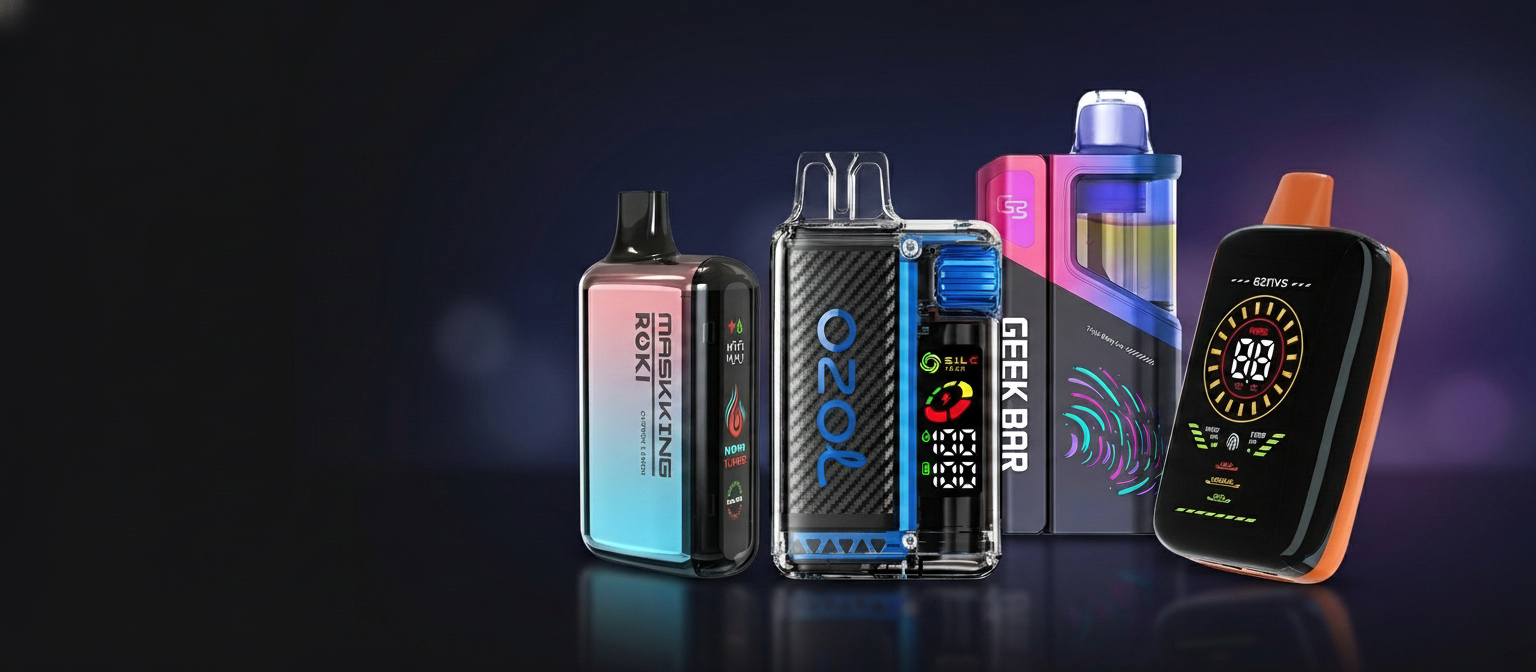
Ask any shop owner or bulk importer about their biggest headache, and they will probably tell you it is a disposable vape leaking before it even hits the counter. When a fresh shipment arrives with sticky boxes and ruined juice chambers, the financial loss hits right away. You end up swallowing return costs, losing store margins, and explaining to upset customers why their new device stopped firing after two days. The problem got much bigger once the industry moved to high-puff devices. Running 18ml to 30ml of salt-nic liquid through a tiny plastic casing means there is a lot more fluid waiting to escape if a single internal seal gives up under pressure.

Through years of export work and supply chain testing at JHS VAPE, we learned that a disposable vape leaking isn’t just about bad luck during shipping. It usually boils down to a mix of poor seal tolerances, bad coil pairing, and extreme pressure changes while cargo moves across borders.
Why E-Liquid Escapes During Transport and Storage
Most liquid issues actually happen long before a customer opens the child-proof wrapper. Cargo planes fly at high altitudes where cabin pressure drops, and ocean containers sit under blazing heat on shipping docks for days. That pressure difference pulls at the air bubble inside the vape’s juice chamber. If the factory used cheap rubber seals that don’t bounce back after flexing, the shifting air inside simply pushes liquid straight down through the central airflow tube.
Managing huge liquid tanks is tricky for another simple reason: cotton saturation. Storing 20ml or 30ml of e-liquid inside a small chassis means the internal organic cotton wicks stay soaked for months in a warehouse. Standard single-layer cotton breaks down over time, letting liquid pool around the base of the heating element. Add summer transit temperatures to the mix, and the vegetable glycerin in the juice thins out fast. Once the liquid loses its viscosity, it slides right past weak internal gaskets.
How We Fix Leakage at the Manufacturing Level
At JHS VAPE, when we inspect manufacturing runs for our wholesale partners, we spend a lot of time looking at internal housing design rather than just outer paint finishes. The best way to keep devices dry is using isolated airway chambers paired with multi-layer silicone gaskets. Instead of letting the liquid tank sit directly over the circuit board, better factories install a completely separate lower catchment area. If a little bit of liquid thins out during a hot summer delivery, that lower chamber catches the condensation before it reaches the auto-draw sensor or the Type-C charging port.
Your choice of heating coil changes how dry the device stays over time too. Old-style single wire coils get hot in one tiny spot. That local hot spot bakes the juice right next to the wire, turns it watery, and causes flooding in the airway. Modern low-resistance mesh coils work much better because they spread heat over a broader surface area. The mesh runs cooler overall, vaporizes juice evenly, and stops liquid from pooling up around the air intake vents.
Spotting Quality Devices Before Ordering Bulk Stock
If you run a shop or buy wholesale lots, you can usually tell how well a vape is built just by holding the outer shell. Vapes made with clear acrylic or heavy polycarbonate shells usually come out of higher-precision injection molds. That means tighter seams along the body joints and far less frame flex when somebody squeezes the device in their hand.
Good warehousing habits help protect your inventory investment too. Always keep bulk stock boxes stacked flat in a cool, dry room away from windows and direct sun. Retail store staff should also take a second to tell buyers not to pull on the mouthpiece like a vacuum cleaner. Hard, sharp draws pull raw juice straight out of the saturated wick before the coil has time to vaporize it. Working with an open, reliable supply chain partner makes all the difference here. Cheap white-label suppliers usually save money by buying thinner silicone seals and low-grade cotton, which always leads to high return rates and dead-on-arrival inventory for the retail shop owner.
Dealing With Temperature Shifts and Fast Chargers
Customers often bring back vapes claiming they started leaking out of nowhere after a few days of normal use. In most cases, it turns out they left the device sitting on a car dashboard under the sun, or they plugged it into a high-wattage fast charger. Fast-charging phone bricks send way too much heat into small vape batteries. That extra heat warms up the liquid reservoir right above the board, making the e-liquid thin out and push past the internal seals. Sticking to a basic 5V wall adapter or a standard laptop USB port keeps the battery cell cool and keeps the juice where it belongs—inside the tank.
Telling real leaks apart from simple condensation saves shop owners a lot of money on unnecessary returns as well. A few stray drops inside the mouthpiece after a long day of heavy vaping is just normal vapor condensation setting on the inner plastic walls. A real leak, on the other hand, leaves liquid running out of the bottom airflow holes or flooding the screen. Knowing the difference keeps your customer service running smoothly without wasting good stock.
Frequently Asked Questions About Vape Leakage
Why is my disposable vape leaking from the bottom airflow holes?
This almost always happens because of sudden heat or pressure shifts. When the internal silicone seal degrades or the e-liquid gets too thin from ambient heat, gravity pulls the fluid down into the lower airflow sensor housing and out through the air intake vents.
Is a leaking disposable vape still safe to use?
If a little liquid gets onto your lips, just wipe it off. However, if e-liquid is leaking out of the bottom near the battery or charging port, stop using it right away. E-liquid is conductive, and a flooded circuit board can cause short circuits, auto-firing, or permanent sensor failure.
Can hard puffing cause a disposable vape to leak?
Yes, absolutely. Disposable vapes rely on steady, gentle air draws to vaporize juice properly. If you pull too hard, you end up vacuum-sucking raw e-liquid out of the saturated cotton wick into the central airway before the mesh coil even has a chance to heat it up.