







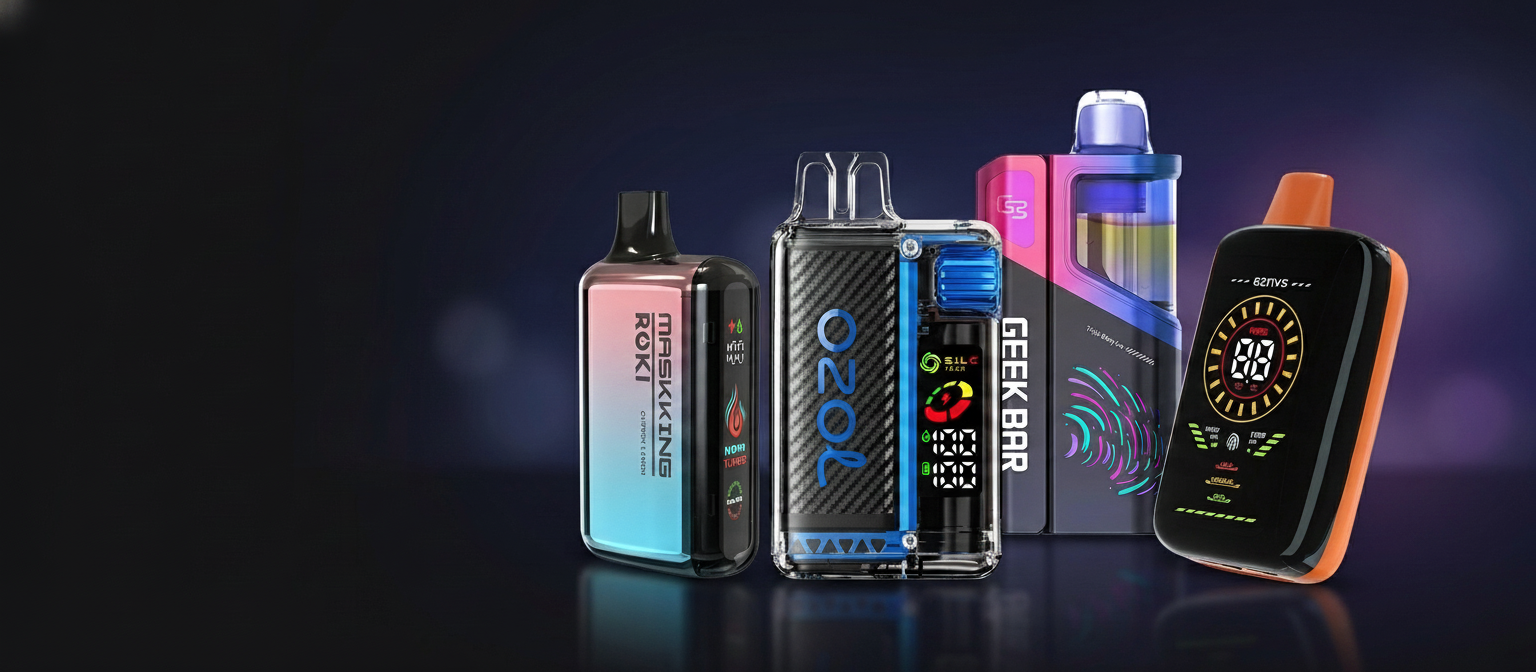
Of the 255 devices we list with a puff rating, 163 sit below 30,000. Read that as a warehouse that missed the trend, if you like. I read it as a warehouse that knows what people buy.
The 180,000-puff headlines are real, and some of those devices sell. They just don’t sell in the volumes the headlines suggest, and the gap between the two has been widening for about two years. Here’s what our own shelf looks like when you sort it by number.

Where the volume actually sits
Below 15,000 puffs there are 77 devices in our catalogue. The 15,000 to 30,000 band holds 86, the biggest single block we have. Everything above that thins out quickly: 42 devices between 30,000 and 50,000, another 35 up to 100,000, and 15 beyond it.
The units that reorder fastest in our own warehouse are the ones in that middle band, and a Poco BL10000 is the shape of them: 20 ML, 650 mAh, no screen tricks, no eight-chamber gimmick, nothing that wins a spec-sheet argument. It simply sits on a counter at a price nobody argues about, and it comes back on the next order.
That is the whole argument, really. The middle isn’t a compromise. It’s where the money turns.
The tank stopped growing before the number did
Sort our catalogue by liquid instead of by puff rating and the shape changes completely. The median tank runs 18 ML under 15,000 puffs, 24 ML in the band above, then sits at 25 ML for everything up to 100,000. Past that it jumps to 64 ML.
Read those two numbers together and something odd appears. A device rated at 20,000 puffs and one rated at 80,000 carry almost the same amount of juice, even though one box says four times the other. The rating is not measuring what you think it is measuring.
None of this is fraud. Puff counts come off bench machines, no two factories run the same protocol, and each one picks a draw length that flatters its own hardware. We went through the mechanics in how puff counts get calculated, and the short version is that millilitres tell you what’s in the box while the puff rating tells you what the marketing department wanted it to say.

What the top of the range really is
Those 15 devices above 100,000 all get there the same way. Not a bigger tank, several smaller ones: six or eight chambers inside one body, a coil in each, and a mouthpiece you rotate to switch. The Fycos 100K 4 في 1 is the easiest to understand — four chambers, 60 ML spread across them, one battery behind the lot. Add the four together and you get the number on the box.
It’s a clever answer to a real problem, which is getting bored of a flavour two thirds of the way through a big tank. It also gives you eight coils where a normal device has one, and a body that no longer goes in a trouser pocket without a fight.
So who buys them? People who can’t restock for a week or two. Shops near a resort, where the customer is passing through and wants one device to last the holiday. Not the regular who comes in every other Friday for the same thing, because for that customer a three-month device is three months of no visit. We put the question to the tier below these in whether 50,000-puff disposables are worth buying, and the answer came back much the same.
Why the middle keeps winning
Three things hold the 15,000 to 30,000 band at the top of our order book, and not one of them is the number on the box.
Price, for a start. A 25,000-puff device lands at a figure somebody hands over without stepping back to think about it, while the 180,000-puff version costs three or four times more and needs a conversation before the wallet opens. Four times the cash, same margin, slower turn.
Size, for another. A 24 ML body still drops into a jacket pocket. Somewhere past 30 ML the housing grows with the tank, and a decent share of customers pick it up, look at it, and put it back.
Then there’s the rhythm, which buyers forget. Three weeks of use brings somebody back in three weeks. Three months of use brings somebody you won’t see until spring, and the visit is where the second sale lives. That’s the quiet advantage of a 24 ML body over a 60 ML one.
What buyers actually put on the shelf
Nearly every sensible order we ship has the same skeleton. Two or three models from the middle, one cheap unit at the bottom for the price-led customer, and a single flagship for the person who asks what your biggest one is. That flagship answers a question. It doesn’t pay the rent.
The mistake is ordering the skeleton backwards. Somebody sees a 180,000-puff unit, gets enthusiastic, and takes a pallet of them. Then comes the unbudgeted part, which is two months of explaining to shopkeepers that the thing in the window is not what most of their customers want.
Size the middle against what moves in a fortnight, not against what reads well in a catalogue, and keep the flagships to a couple of test units. Every listing in the Europe range prints millilitres beside the puff rating, so you can sort a shortlist yourself before any money leaves your account.

Two things that did change
Two things moved across the whole range in the last three years, and neither of them is the puff number.
Screens went everywhere. A display used to be a flagship feature. Now a 10,000-puff unit cheaper than a night out shows battery level and how much liquid is left, and a device without one reads as cheap no matter what’s inside the shell.
Coils levelled out as well. Mesh is standard at every price point, resistances sit around 0.8 to 1.1 ohm, and the draw from a budget unit is far closer to an expensive one than it was. At the top of the range you are paying for size, a screen and chamber count. The puff itself isn’t better.
How to read any catalogue, including ours
Two numbers carry weight and one doesn’t. Millilitres tell you what’s in the device. Milliamp hours tell you how it behaves in the second week. The puff rating tells you which marketing tier the factory aimed at when it printed the box.
We print the first two on every listing for that reason. An afternoon of arithmetic before a container ships is cheaper than a season of finding out afterwards. Whether any of this holds next year is a different question, and three years in this trade has taught me one thing above all: a printed number can stop meaning anything, and it can happen inside a single season.
Sold to adults of legal smoking age only, and nicotine is addictive. Every figure quoted comes from manufacturer specifications on our own listings rather than an independent market survey, and none of it is a health, safety or cessation claim.