



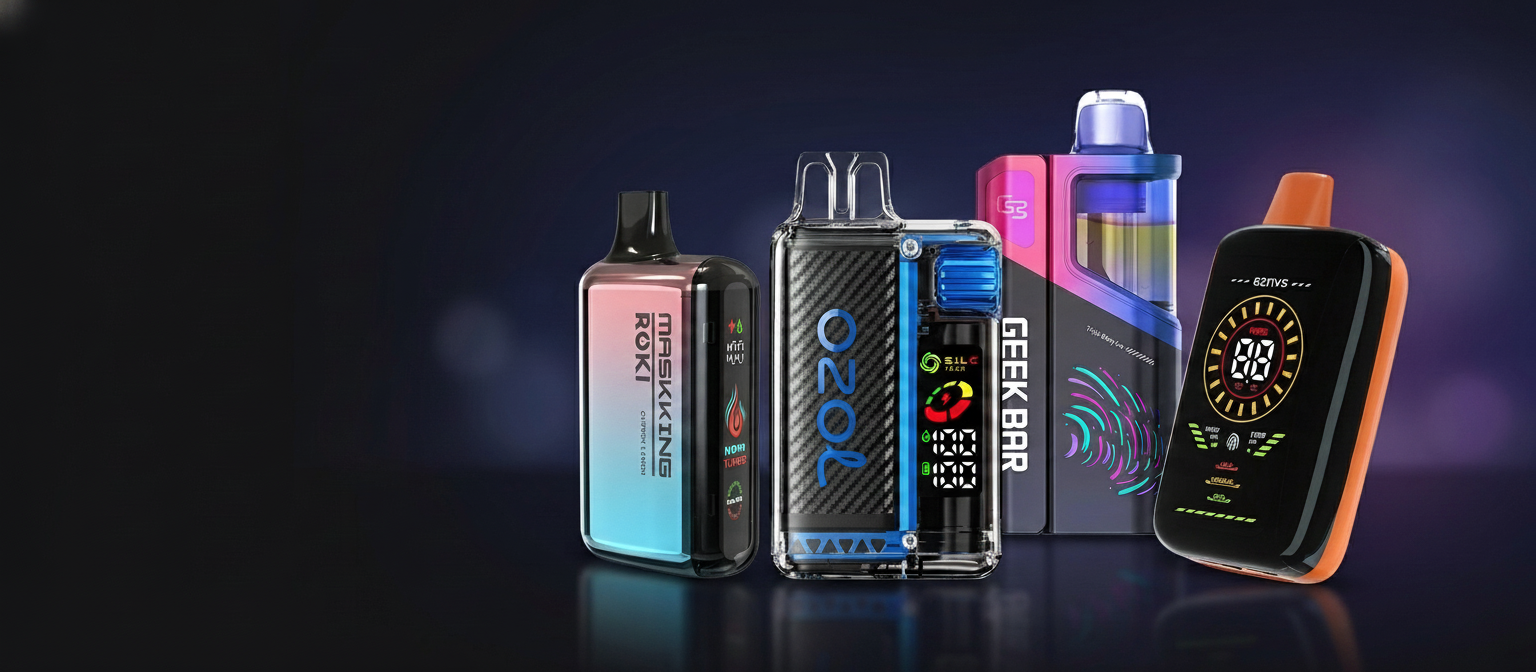
A buyer asked me last week why a 30 ml device and a 15 ml device both advertise 850 mAh. He assumed one of the listings was wrong. Neither was, and the answer says more about how these things get built than any spec sheet does.
I went through every listing in our catalogue that prints a battery figure. Of the 107 devices stating both a milliamp hour rating and a tank size, thirty-nine say 650 mAh, sixteen say 850 and thirteen say 600. Three numbers, two thirds of the range, in a category that brings out a new model every fortnight.

Tanks doubled, batteries did not
Sort those 107 by tank size and the shape gets clearer. Up to 16 ml, the median battery is 680 mAh. From 16 to 21 ml it’s 650. From 21 to 30 ml, 650 again. The tank nearly doubles across those bands. The cell behind it never moves.
Only the biggest group breaks away. Above 30 ml the median goes to 850 mAh, and above 25 ml it reads 750 against 650 below. Both are smaller steps than the puff ratings would have you believe.
My buyer’s two devices turned out to sit either side of that line. The 15 ml unit really did have 850 mAh in it, and so did the 30 ml one, because both factories bought the same cell and drew a different body around it. What separates them isn’t power. It’s plastic and juice.
Three disposable vape battery sizes, and a lot of shells
The whole distribution looks like a purchasing list somebody wrote in a hurry. 650 mAh sits on thirty-nine devices. 850 on sixteen. 600 on thirteen. Below that, five devices run 500 and five run 550, while 700, 750, 900 and 950 turn up two or three times each and might as well not exist.
Those empty gaps tell you what’s happening. Standard cells are already stocked, already tested, already certified. A factory launching a platform in eight weeks doesn’t design a battery, it picks one off the shelf and draws a body around it, and the body is the only part anybody sees.
Which is blunt news for a buyer. The battery figure on a listing tells you which cell was cheap that quarter. It tells you nothing about how the thing behaves in someone’s hand.
Milliamp hours per millilitre
Here’s the comparison that does predict behaviour. Divide the cell by the tank and you get milliamp hours per millilitre, which is roughly how much electricity a device has for the juice it’s carrying.
The Stag Bar 6 in 1 is the lowest in our catalogue at 9.3, with a 1000 mAh cell dragging around 108 ml. The Stag Bar 4 in 1 sits at 13.9. Happ Bar GR50000 is 14.1 on 650 mAh and 46 ml, Hifancy Dream 45K reads 15.5, Zooy Zero 45000 is 16.2, JNR 120K Quads comes to 16.7, Bang Leader 110000 lands at 18.9.

Now put a pod next to those. A Wotofo nexpod runs 680 mAh behind 8 ml, which is 85 mAh per millilitre. An Ovns pod runs 550 behind 4 ml, or 137. A closed pod carries nine to fifteen times the electrical headroom per millilitre of a big disposable, which is why nobody complains about a pod running dry mid-tank.
Same cell, different impression, depending on what it has to serve. Waka Blast 36000 puts 850 mAh behind 15 ml for 56.7, one of the highest figures among the big-puff devices. Bang Leader 110000 puts the identical 850 mAh behind 45 ml and gets 18.9. Same battery. Three times the load.
Do the division yourself, it takes ten seconds. Milliamp hours over millilitres, written next to the puff rating. Under 20 and it’ll be on the charger constantly. Over 40 and the cell will probably outlast the liquid. Most of what we sell sits between the two. The large-tank platforms are grouped in the Europe range with both figures on every listing, so you can run the arithmetic on a shortlist instead of taking our word for it.
Why the factory gets away with it
Because nearly everything recharges now. Ninety of those 107 devices charge over Type-C, and the industry got through that shift in about two seasons. We wrote the background up separately in why everyone moved to a rechargeable disposable vape, and it explains more of this than any spec sheet will.
The cell no longer has to empty the tank. It has to get through a day, a shift, a long drive, and then it goes on a cable like a phone. Before Type-C, a 20 ml device had to finish 20 ml on one charge or the last third of the bottle went in the bin.
It explains the screens as well. Ninety-four of the 107 have one. Once the battery isn’t matched to the tank, somebody has to tell the user where they stand, and a screen is cheaper than a bigger cell.
Who notices, and when
Not everyone hits the same wall. Charging twice a day is nothing to somebody at a desk and miserable for a long-distance driver.
The complaints that come back to us land in week two rather than week one, and they come from people who vape steadily through a shift, so the cell empties before the tank does and the device ends up with liquid left and no power behind it.
Shift workers and drivers are the two groups worth thinking about when you pick a line. If your customers look like that, mAh per millilitre matters more than the number on the box.

Three questions worth putting to any supplier. A heavy user gets how many charges out of a full tank, what is the real cell rating as opposed to the printed one, and does the output hold as the battery falls or taper away over the tank? That last part decides whether week three tastes like week one.
What to do with all this when you order
Stop comparing battery figures across devices with different tanks, because 850 mAh in a 15 ml body and 850 mAh in a 45 ml body are two different products and the label won’t tell you which one annoys your customer.
Ask about charging cycles instead. It’s the question the spec sheet dodges, and it decides whether the device comes back a second time.
Six years ago nobody in this trade did this arithmetic, because a disposable had to finish its own tank on a single charge and everything was sized around that constraint. One port removed it. The next shift will come from somewhere else, and when it lands, the mAh per millilitre figures above are the ones that move first.
For adults of legal smoking age only, and nicotine is addictive. Cell figures are manufacturer data rather than anything we measured, so runtime moves with temperature, cell age and charging habits.